
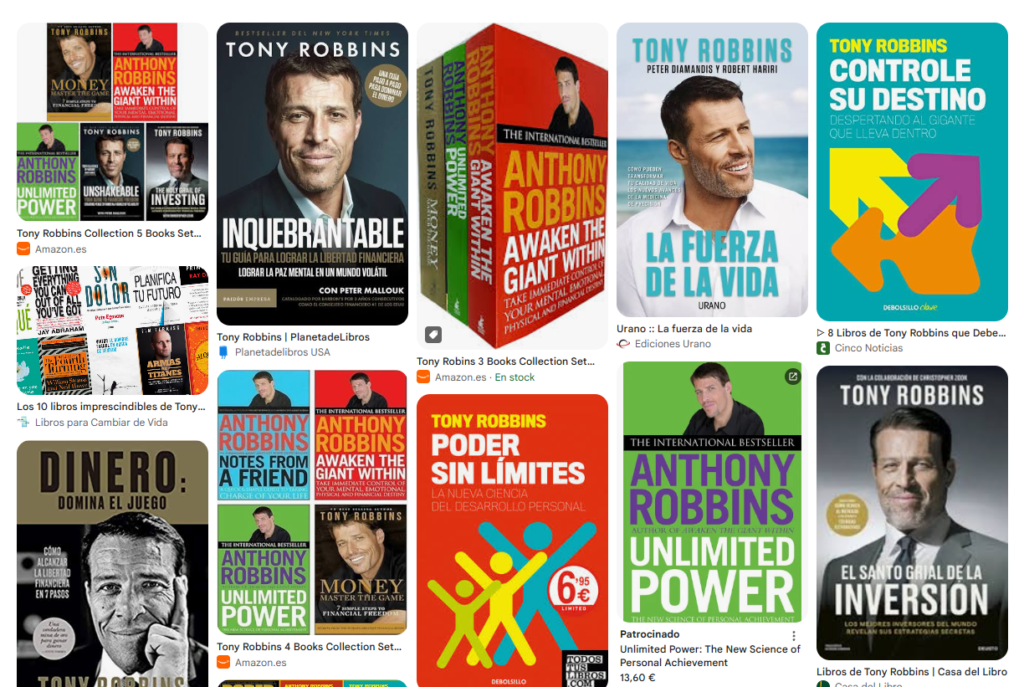
In the United States, while adult nonfiction overall declined in 2025, self-help books grew by 14.7%. The year’s best-selling title, Mel Robbins’ The Let Them Theory, sold over 2.8 million copies in 2025 alone. Alongside it, classics like The 7 Habits of Highly Effective People (over 40 million copies), Rich Dad Poor Dad (over 44 million counting the series), and Atomic Habits (over 20 million) keep dominating the charts. The global self-help market is projected to reach $14 billion by 2025.
Interestingly, Bible sales in the US have also grown in that same period — from 9 to 19 million copies in just 5 or 6 years, partly fueled by a Christian revival that began on college campuses after the pandemic. But that raises an uncomfortable question: when someone has a problem, which book do they reach for first — God’s Word, or the latest self-improvement formula?
Picture someone who, for years, has read dozens of self-help books. They’ve applied productivity techniques, positive mindset, atomic habits, visualization. And yet they still feel empty inside. This person represents millions searching for transformation… in the wrong place. In fact, several studies show that between 50% and 80% of people who attempt major habit changes fail to sustain them after a year or two, because most of these approaches rely almost entirely on human willpower — which is limited.
1. DON’T TRUST YOURSELF: TRUST GOD
Self-help books constantly repeat “trust yourself” and “you have everything you need within.” None of them mention God; all of them place the source of change inside the person. The Bible says the exact opposite.
“Trust in the LORD with all thine heart; and lean not unto thine own understanding.” Proverbs 3:5
“Blessed is the man that trusteth in the LORD, and whose hope the LORD is… for he shall be as a tree planted by the waters.” Jeremiah 17:7
There’s nothing wrong with these books helping us organize our thoughts or build good habits. The problem isn’t reading them; it’s expecting them, rather than Christ, to change our lives. No book and no author can be placed above the Word of God.
2. THE OMNIPOTENCE OF GOD
Self-help teaches that “if you believe it, you’ll achieve it” — cutting God completely out of the equation. In recent weeks, memes have circulated of people pouring gasoline outside the pump, claiming it attracts an “abundance mindset.” Nothing could be further from biblical faith: the impossible is only possible because there is an all-powerful God who acts — not because we visualize it.
“Is any thing too hard for the LORD?” Genesis 18:14
“With men this is impossible; but with God all things are possible.” Matthew 19:26
When Sarah laughed at the news she would have a child in her old age, God answered with that very question: is anything too hard for the Lord? The one who works miracles isn’t a visualization technique or a mantra repeated each morning. It’s God.
3. GOD’S PLANS AND PURPOSES
These books insist you must “design what you want”: a beach house, a Ferrari, a yacht. The Bible teaches something different: God already has a purpose written for each of us, even before we were born.
“For I know the thoughts that I think toward you, saith the LORD, thoughts of peace, and not of evil, to give you an expected end.” Jeremiah 29:11
It’s common to meet young couples who postpone having children year after year while “planning” by the world’s standards: house first, then the car, then enough savings. The point isn’t to stop planning — it’s making sure God is part of that plan, not left out of it.
4. THE PRESENCE AND COMPANIONSHIP OF GOD
Self-help insists on “self-motivation”: you have to be your own source of encouragement. But tell someone in deep depression to simply “smile and motivate themselves,” and you’ll see how little it helps. Scripture, instead, doesn’t ask us to motivate ourselves alone — it reminds us that God himself walks with us.
“Fear thou not; for I am with thee: be not dismayed; for I am thy God: I will strengthen thee; yea, I will help thee.” Isaiah 41:10
It’s well known that many people go through a stage of deep crisis and discouragement around age 40-45. Telling someone in that moment to simply “self-motivate” rarely changes anything. It’s very different to fix your eyes on a God who promises to stay, not to abandon.
5. GOD FIGHTS YOUR BATTLES
No personal development book — not even those by authors who’ve sold hundreds of millions of copies — claims there’s Someone who fights your battles for you. Every single one places the ultimate responsibility on human effort alone.
“The LORD shall fight for you, and ye shall hold your peace.” Exodus 14:14
Three immediate family members overcame cancer after being given little hope by medicine: a mother with pancreatic cancer fully healed, a father with lung cancer given three months to live who lived five more years, a sister-in-law with metastatic breast cancer now free of the disease. No self-help book offers that kind of hope, because none of them recognize a God who intervenes.
ABUNDANT LIFE AND HOPE IN AFFLICTION
Personal development books talk about “reaching your full potential” through personal effort, and claim positive thinking eliminates suffering. The Bible acknowledges that the righteous also go through afflictions, but offers something no book can give: the promise that God delivers and renews strength in the midst of pain.
“The thief cometh not, but for to steal, and to kill, and to destroy: I am come that they might have life, and that they might have it more abundantly.” John 10:10
“But they that wait upon the LORD shall renew their strength; they shall mount up with wings as eagles.” Isaiah 40:31
CONCLUSION
There’s nothing wrong with reading a book that helps us organize habits, manage money, or think more clearly. The problem starts when that book takes the place that belongs only to God: guiding our lives, sustaining us in hardship, and fighting our battles. No author, no matter how many millions of copies sold, can offer what the Bible offers: a God who knows us, has a purpose for us, and promises to be present every day.
The next time you open a self-help book, ask yourself a simple question: does this line up with what God’s Word says, or is it placing my trust in the wrong place?
